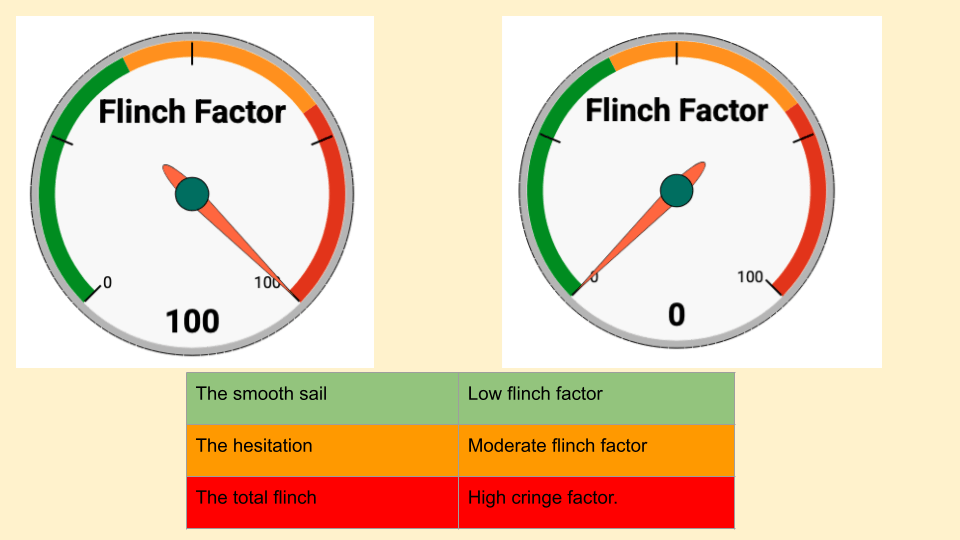
Many of us have used tools like emotional thermometers, visual schedules, or coping strategies to help our child communicate and respond to their feelings. We teach them that feelings are information, not emergencies.
Adults need those tools as well.
Caregiving often asks us to consider impossible questions. What happens when I’m gone? What if something changes tomorrow? Sometimes the weight of those unsolved problems can trigger what I call a high flinch factor. That instinct to avoid, shut down, procrastinate or hide under the covers.
Those feelings are valid. But they don’t mean what we think they do. A high flinch factor isn’t a sign that you’re failing, it is a sign of being overwhelmed. Flinch Factor is a way to measure how emotionally difficult something feels in the moment.
When your flinch factor spikes:
Notice
- Learn to recognize those dark, heavy feelings.
- Pay attention to urges to avoid, freeze or catastrophize
- Ask yourself: What am I flinching from right now?
Pause
- Check in with yourself
- Accept that your brain may be overloaded.
- Recognize that your internal resources are limited
- Intentionally pause your system.
Reframe
- Talk to yourself the way you would talk to a friend
- These feelings are a signal, not a personal failure
- Remind yourself: This is how I feel right now.
- The present moment doesn’t define the future
Reset
- Turn on music, sing or dance
- Use humor, playfulness or silly voices to shift energy
- Lean into a hobby or explore new interests
- Take a dedicated coffee or tea break
- Enjoy books, shows, puzzles or spend time outside.
We can’t eliminate difficult feelings. The goal is to spend less time in those dark places.
Discover more from Meet The Horizon
Subscribe to get the latest posts sent to your email.

